
Financing HUD Tiny Homes for Retirement in 2026
By Tiny Life Homes on 11/20/26, 9:33 AM
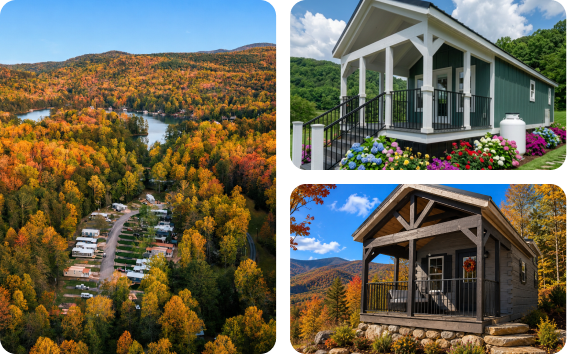
You've spent decades building a life. Now you want to pare it down to something that actually fits the way you plan to live next. A HUD-coded tiny home can get you there: less maintenance, lower monthly costs, and a purposeful space built for comfort rather than clutter. But the moment you start asking about financing, things get complicated fast.
Lenders don't care how charming your floor plan is. They care how the home is classified, where it sits, and whether you own the land underneath it. This guide walks you through every major financing path for HUD-coded tiny homes, explains what that HUD label actually means for your wallet, and shows you how to match the right loan to the retirement you're building.
Key Takeaways: Financing HUD-Coded Tiny Homes for Retirement
- HUD-coded tiny homes qualify for FHA, VA, and conventional mortgage programs that park model RVs cannot access.
- Placing your home on owned land with a permanent foundation unlocks the widest range of financing options and lower interest rates.
- Chattel loans finance the home only, carry shorter terms and higher rates, but work when you lease the land.
- Tiny Life Homes walks buyers through financing from consultation to move-in at their Franklin, N.C. sales center.
- Retirees on fixed incomes should compare total loan cost over the full term, not just the monthly payment amount.
What Does HUD-Coded Actually Mean for a Tiny Home?
HUD-coded means the home was built under the federal Manufactured Home Construction and Safety Standards, enforced by the U.S. Department of Housing and Urban Development. Those standards cover structural integrity, fire safety, energy efficiency, plumbing, and more. Every compliant home section gets a red HUD certification label before it leaves the factory.
That label matters more than most buyers realize. It tells lenders, insurers, and local zoning boards that the home meets a recognized federal standard. Without it, many financing programs are off the table entirely. A HUD-coded tiny home in the 400-to-800-square-foot range gives you the intentional footprint of a tiny house with the regulatory standing of a manufactured home.
Park model RVs, by contrast, are built to the ANSI A119.5 recreational vehicle standard. They top out at 399 square feet and are classified as recreational vehicles. That classification limits financing to RV loans, personal loans, or chattel loans with shorter terms and higher interest rates.
Why Does the HUD Label Change Your Financing Options?
Lenders evaluate risk by classification, not by square footage. A HUD-coded home on a permanent foundation, placed on land you own, can be titled as real property. Real property titling opens the door to conventional mortgages, FHA loans, VA loans, and USDA rural housing programs.
According to a 2026 analysis by The Pew Charitable Trusts, a $100,000 mortgage saves a typical borrower roughly $49,000 compared with home-only financing over the life of the loan. Mortgage borrowers also pay about 10% less per month than those using chattel loans. That gap adds up quickly on a fixed retirement income.
When the home is titled as personal property (which happens when it sits on leased land or hasn't been converted to real estate title), mortgage financing is unavailable. Buyers in that situation are limited to chattel loans or contract financing, both of which carry fewer consumer protections.
What Financing Options Are Available for HUD-Coded Tiny Homes?
More financing doors are open to HUD-coded homes than most retirees expect. Here are the primary paths, organized by how the home is classified and where it will sit.
FHA Title I Manufactured Home Loans
The Federal Housing Administration insures loans for manufactured homes under its Title I program. These loans cover the home alone, the lot alone, or a combination of both. Maximum loan terms reach 20 years for a single-section home and 25 years for a multi-section home. Down payments tend to be lower than conventional loans, and interest rates reflect the FHA insurance backing.
To qualify, the home must carry a HUD certification label, meet model manufactured home installation standards, and sit on a site with adequate water and sewage. For retirees buying a HUD-coded tiny home in a community with established infrastructure, this program is a practical starting point.
FHA Title II Mortgage Loans
When a HUD-coded home is permanently affixed to land the buyer owns and titled as real estate, it can qualify for a standard FHA Title II mortgage. These loans function like traditional home mortgages with terms up to 30 years, competitive interest rates, and down payments as low as 3.5%.
The home must be classified as real property under state law, which typically requires surrendering the vehicle title, attaching the home to a permanent foundation, and recording the home and land together on the deed. State titling requirements vary, so check your state's rules early in the process.
VA Loans for Manufactured Homes
Veterans and eligible surviving spouses can use VA loan benefits to purchase a HUD-coded manufactured home with or without land. VA loans require no down payment and carry competitive interest rates. The home must meet VA minimum property requirements, including permanent foundation placement and real estate titling.
For retired military personnel considering a high-quality tiny home as their next chapter, VA financing removes one of the biggest upfront barriers. No down payment, competitive rates, and a home built to federal standards. That's a strong starting position.
Conventional Mortgages
Fannie Mae and Freddie Mac both purchase loans on manufactured homes that meet their guidelines. The home must be HUD-coded, permanently attached to owned land, and titled as real estate. Fannie Mae's MH Advantage program offers terms comparable to site-built home financing when the home includes specific architectural features like a pitched roof and covered porch.
These loans often require a higher credit score and a larger down payment than FHA options, but they avoid the ongoing mortgage insurance premiums that FHA borrowers pay.
Chattel Loans (Home-Only Financing)
Chattel loans finance the home as personal property, separate from any land. This is the most common financing path when you plan to place your home in a leased-lot community or a tiny home village where you don't own the underlying land.
Terms typically run 15 to 23 years, with interest rates higher than mortgage rates. Down payments usually start around 5% to 10%. Specialists like 21st Mortgage Corporation focus specifically on manufactured and park model home financing and work directly with dealers.
USDA Rural Development Loans
If the home will be placed in a USDA-eligible rural area (and much of western North Carolina qualifies), the USDA's Single Family Housing program can finance a HUD-coded manufactured home on a permanent foundation. These loans offer competitive rates and, in some cases, zero down payment for income-eligible borrowers.
How Does Land Ownership Affect Your Financing?
Land is the single biggest factor in determining which loans are available to you. Own the land and permanently affix the home, and lenders treat the whole package as real estate. Lease the land, and the home stays classified as personal property regardless of how well it's built.
Retirees who already own land have a clear advantage. Placing a HUD-coded tiny home on your property and converting the title to real estate gives you access to mortgage-rate financing, property tax homestead exemptions in many states, and the potential for long-term appreciation. A 2026 Realtor.com report found that manufactured homes sold with land appreciated 70.1% between 2019 and 2026, outpacing the 58.6% gain for site-built homes during the same period.
If you plan to place your home in a resort-style community on a leased lot, chattel financing is your primary path. Factor lot rent into your total monthly housing cost alongside the loan payment, insurance, and any HOA fees.
What Should Retirees on Fixed Incomes Watch Out For?
Financing a home on a fixed retirement income is a completely different equation than buying during your peak earning years. Here are the specific risks that deserve your attention before you sign anything.
Total Loan Cost Over the Full Term
A lower monthly payment on a longer-term loan can cost tens of thousands more in total interest. Run the numbers for the full duration, not just the monthly figure. If you can be more financially stable by choosing a 15-year mortgage at a lower rate over a 20-year chattel loan at a higher one, then why would you choose the more expensive option?
Lot Rent Escalation
If your home sits on leased land, your lot rent can increase over time. Unlike a fixed mortgage payment, lot rent is subject to renegotiation at each lease term. Budget for annual increases when calculating whether the numbers work long-term on Social Security or pension income.
Insurance and Titling Differences
Homes titled as personal property require different insurance policies than homes titled as real estate. Manufactured home insurance (sometimes called mobile home insurance) can carry higher premiums than standard homeowner's insurance. Confirm the insurance cost for your specific classification before committing to a purchase.
State Titling Conversion Rules
Every state handles manufactured home titling differently. Some make it straightforward to convert a home from personal property to real estate. Others require specific foundation certifications, title surrender processes, and recording fees. Understanding your state's process early can save you from getting locked into a less favorable financing path.
How Tiny Life Homes Helps Retirees Navigate Financing
Tiny Life Homes builds HUD-coded tiny homes from 400 to 800 square feet, along with ANSI A119.5 park model RVs, right from their sales center in Franklin, N.C. Their financing page connects you directly with lending partners who specialize in manufactured and park model home loans.
Preferred lending partners include 21st Mortgage Corporation (specializing in park model and manufactured home loans with terms up to 25 years), First Credit Corporation (three decades of manufactured home lending experience), and Nantahala Bank (a locally owned community bank in the Franklin area). Each lender offers different programs depending on the home type, land ownership, and your financial profile.
Tiny Life Homes also offers a guided consultation process covering home selection, financing discussion, delivery logistics, and setup. If you've never purchased a manufactured or park model home before, having someone walk you through each step makes the whole process feel a lot less like a leap of faith.
How Do HUD-Coded Tiny Homes Compare to Park Model RVs for Retirement?
Both HUD-coded homes and park model RVs work well for retirement living. Your choice comes down to where you want to live, how you plan to finance the purchase, and whether you need the home to build equity as real property.
| Factor | HUD-Coded Tiny Home | Park Model RV |
|---|---|---|
| Construction Standard | Federal HUD code | ANSI A119.5 |
| Size Range | 400 to 800+ sq ft | Under 400 sq ft |
| Mortgage Eligible | Yes (on owned land with permanent foundation) | No |
| FHA/VA Loan Eligible | Yes | No |
| Typical Financing | Mortgage, chattel, FHA, VA, USDA | RV loan, chattel, personal loan |
| Placement Flexibility | Private land, manufactured home communities | RV parks, campgrounds, some private land |
| Appreciation Potential | Yes (titled as real estate with land) | Typically depreciates like an RV |
Tiny Life Homes offers both types from their Franklin, N.C. sales center, along with placement in communities like Peaceful Meadows and Sugar Mill Creek. Their team can walk you through which classification fits your retirement goals and budget.
Step-by-Step: How to Finance a HUD-Coded Tiny Home for Retirement
Getting from "interested" to "keys in hand" follows a predictable sequence when you break it down. Here's the process.
Step 1: Clarify Your Land Situation
Do you own land where the home can be placed? Will you buy land? Or will you place the home in a leased-lot community? This single decision narrows your financing options to a manageable list. If you own land in a USDA-eligible rural area, that opens additional zero-down programs.
Step 2: Check Your Credit and Retirement Income Documentation
Lenders will evaluate your creditworthiness using your credit score, retirement income sources (Social Security, pensions, investment withdrawals), and debt-to-income ratio. FHA programs accept credit scores as low as 580 with a 3.5% down payment. Chattel lenders like 21st Mortgage typically require 650 or higher.
Step 3: Get Pre-Approved Before Shopping
Contact one or more of the lending partners listed on the Tiny Life Homes financing page and get pre-approved. Pre-approval tells you exactly how much home you can afford and signals to dealers that you're a serious buyer.
Step 4: Choose Your Home
Visit the Tiny Life Homes sales center in Franklin, N.C., or browse their inventory online. HUD-coded models like the Cozy Cabin series range from 480 to 690 square feet with one or two bedrooms. Park model options like the Cahaba, Cascade, and Blackberry deliver under-400-square-foot living with full kitchens and spa-inspired bathrooms.
Step 5: Finalize Financing and Close
Once you've selected a home, your lender will order an appraisal (for mortgage loans) or a valuation (for chattel loans), verify the HUD certification label, and process your application. Closing timelines vary by loan type but typically range from 30 to 60 days.
Step 6: Installation and Setup
Delivery, foundation work, utility hookups, and final inspections complete the process. HUD-coded homes placed on permanent foundations require a licensed installer who certifies compliance with federal installation standards. Your dealer coordinates this process.
What Questions Should You Ask a Lender Before Signing?
Walk into every lender conversation with these questions ready. The answers will tell you whether you're getting a competitive deal or leaving money on the table.
- Is this a mortgage or a chattel loan? The distinction affects your interest rate, term length, tax deductibility, and consumer protections.
- What is the total cost of the loan over its full term? Ask for the total of all payments, not just the monthly amount.
- Are there prepayment penalties? Some chattel loans penalize early payoff. Mortgages backed by FHA or VA do not.
- What foundation and titling requirements does this loan require? Confirm that your planned installation meets the lender's standards before you commit.
- Does my state allow me to convert this home's title from personal property to real estate? If so, ask the lender whether converting the title later could qualify you to refinance into a mortgage at a lower rate.
In Conclusion: Match the Financing to Your Retirement Plan
Financing a HUD-coded tiny home for retirement is not one-size-fits-all. The right loan depends on whether you own land, how the home is titled, and what your monthly budget can handle over the long term. HUD coding gives you access to financing programs that park model RVs simply cannot reach, and that access translates directly into lower rates, longer terms, and stronger protections.
Figure out your land situation first. Get pre-approved with a lender who knows manufactured home financing. Then visit Tiny Life Homes in Franklin, N.C., pick the model that fits your life, and lock in the financing. Buy small and put your money where it actually works for you.
FAQs About Financing HUD-Coded Tiny Homes for Retirement
Can you get a regular mortgage on a HUD-coded tiny home?
Yes. A HUD-coded tiny home placed on a permanent foundation on land you own can be titled as real estate and financed with a conventional mortgage, FHA loan, or VA loan. Tiny Life Homes connects buyers with lenders who handle this process regularly.
What credit score do you need to finance a manufactured tiny home?
FHA loans accept credit scores as low as 580 with a 3.5% down payment. Chattel loan programs often require a minimum score of 650. VA loans do not set a strict minimum but most lenders prefer 620 or above. Check with your lender for specific requirements.
What is the difference between a chattel loan and a mortgage for a tiny home?
A chattel loan finances the home as personal property, separate from land. A mortgage finances the home and land together as real estate. Mortgages typically carry lower interest rates, longer terms, and stronger consumer protections. Tiny Life Homes offers lending partners for both types.
Do HUD-coded tiny homes appreciate in value?
HUD-coded homes titled as real estate with land have shown strong appreciation. A 2026 Realtor.com analysis found that manufactured homes sold with land appreciated 70.1% between 2019 and 2026. Homes sold without land also gained value but at a lower rate of 51.6%.
How does Tiny Life Homes help retirees with financing?
Tiny Life Homes partners with multiple lenders, including 21st Mortgage Corporation and Nantahala Bank, who specialize in manufactured and park model home financing. Their sales team provides guided consultations covering home selection, financing options, and the full purchase process from their Franklin, N.C. location.
Can you use a VA loan to buy a tiny home for retirement?
Yes. Veterans and eligible surviving spouses can use VA loan benefits to purchase a HUD-coded manufactured home. The home must be placed on a permanent foundation and titled as real estate. VA loans require no down payment and offer competitive rates.
What is the biggest financing mistake retirees make with tiny homes?
Focusing only on the monthly payment instead of the total loan cost. A chattel loan with a higher interest rate and longer term can cost $49,000 more over its lifetime than a mortgage on the same home, according to Pew Charitable Trusts research. Always compare total cost.
Want to see the lenders we partner with? Simply Click Below:
You May Also Like
These Related Stories

Have You Seen a Tiny Home Scam?

Luxury Tiny Homes: Comfort and Quality in 2026