


Know the differences.
Tiny homes and park models are closely related and although they are both traditionally built to ANSI code (RV), they do have some distinct differences.
Tiny Homes/Towables.
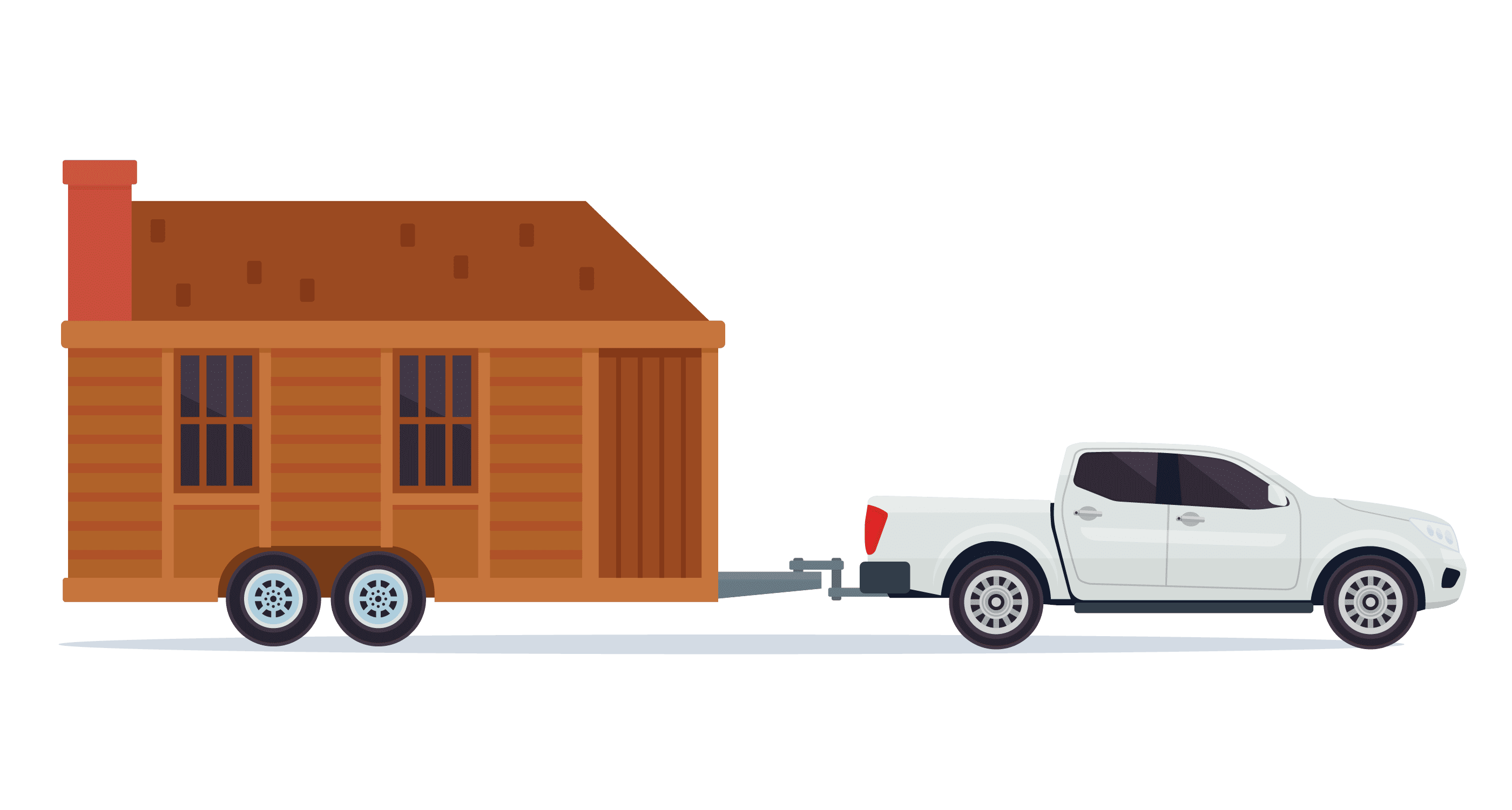 A tiny home is loosely defined as a home under 200 sq. ft. Tiny homes are most often built on a trailer and are generally road legal. This means that anyone can tow a tiny home (with the right truck of course!) and no permits or CDL are required. Tiny homes built to ANSI code do not go on a foundation and remain permanently on the trailer they were built on. Tiny homes can be built in a variety of lengths, from a super short 4’ to a luxurious 48’*, but must always remain under 8’6” in width in order to be road legal. In addition, the height of a tiny home should not exceed 13’6” (the legal maximum height most states allow without a permit).
Most states also have a maximum total length (truck and trailer) of 65’. Remember, the larger the home, the larger the vehicle needed to tow it. Always keep these restrictions in mind when planning to build a tiny home you intend to move.
(Trailers exceeding 40’ must be gooseneck, thus allowing a 48’ overall trailer length)
Park Models.
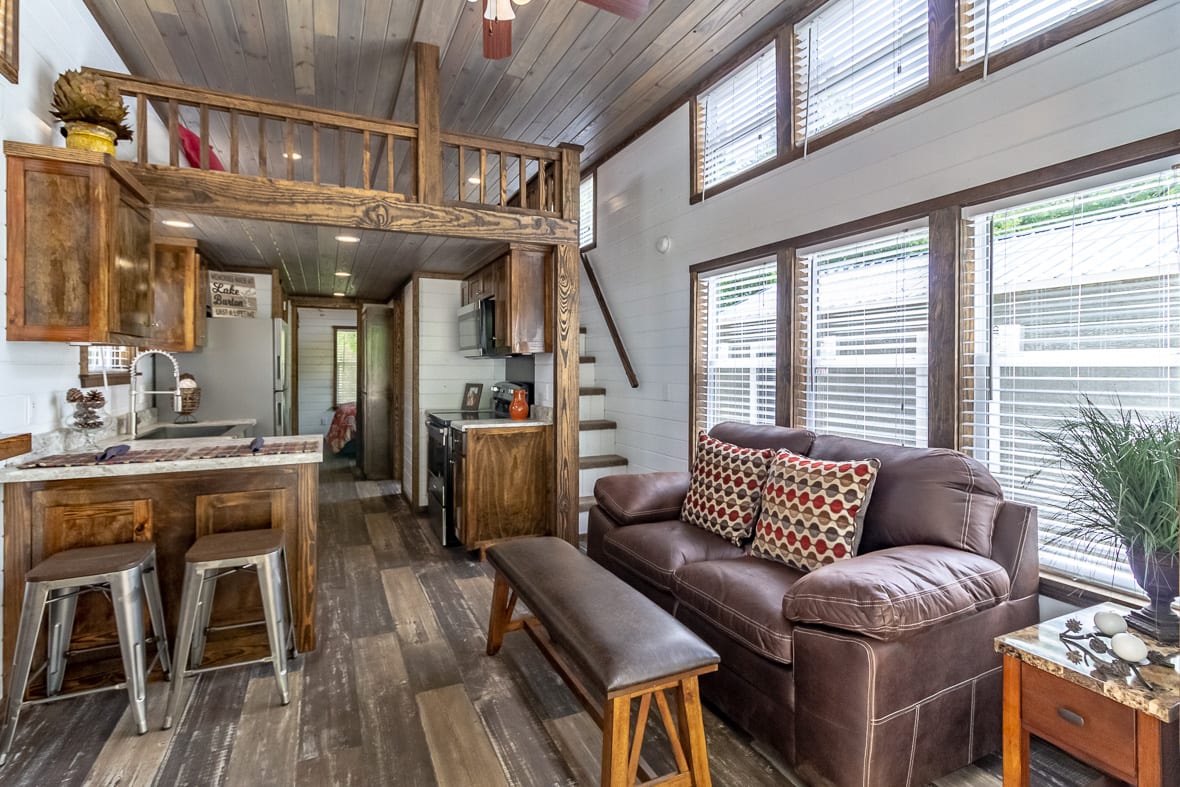 Park models are ‘tiny homes on steroids’. Park models are under 400 sq. ft. and are usually built to ANSI code (RV) as well. They are generally single story 1 bedroom/1 bathroom structures. Many park models offer a loft option as well, which provides some additional space for storage, guest sleeping area, kids’ room, etc. The loft space is not included in the total square footage of the home as it cannot legally be considered ‘livable’ space due to the ceiling height. Many people ask if the ceiling height can be raised and the simple answer to that is no.
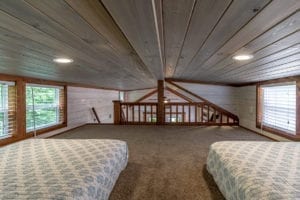
The maximum loft height for a park model is 5’. Anything over 5’ must be counted in the square footage, thus exceeding the 400 sq. ft. maximum. You cannot move a park model with a 1 ton truck. Park models must be professionally moved with a toter truck, acquire proper permitting, and require the driver to have a CDL.
You can utilize them for:
- Resort Residence
- Mother-in-law Residence
- Retirement Home
- Bed and Breakfast
- Vacation Home
- Bunkhouse
- Guest House
- Office Space
- Hunting Cabin
- Pool House
- “Home Base” for RV Enthusiasts
- Student Housing
- Investment Property